


Some of you may have noticed I went quiet.
Not completely — but quieter than usual, and quieter than I intended. The Proximity Portal has been a space I’ve wanted to fill for a long time with the kind of writing that doesn’t fit anywhere else: the theological reflection that’s too personal for a sermon, too specific for an essay, too alive to leave in a notebook.
I owe you an account of where I’ve been. Here it is.
A child arrived.
His name is Ravi Gilbert Penhollow. He was born on August 29, 2022 — one year, almost to the day, after the sudden death of my brother. In my brother’s house. A detail I am still learning how to carry.
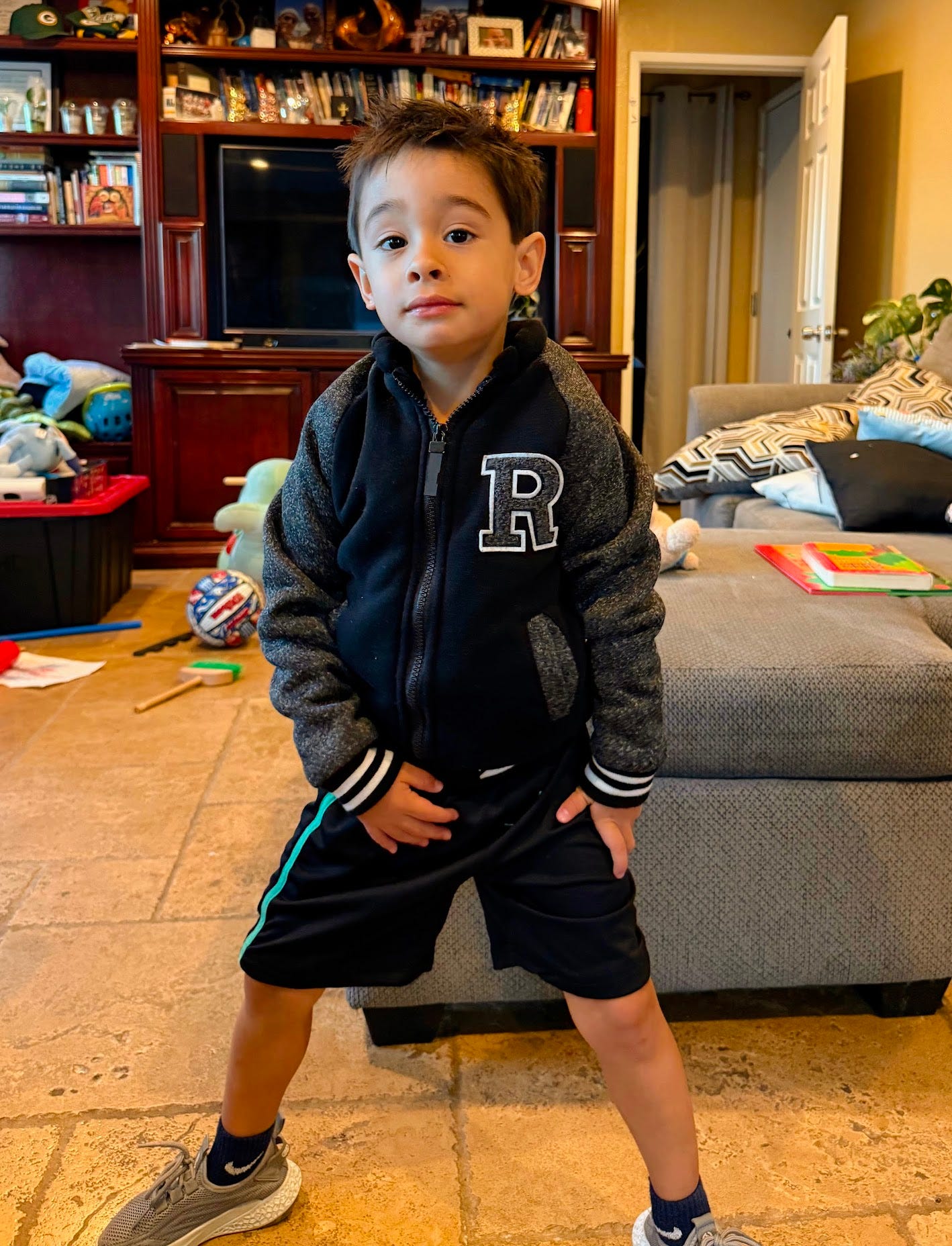
I did not expect to have a child at this point in my life. Ravi arrived in the hardest year I have lived, in the middle of grief I hadn’t finished moving through, and he was — there is no other word for it — a visitation. Not a distraction from the grief. A companion through it. A living argument that the story wasn’t over.
That year, and what came out of it, deserves its own writing. I’ll get there. For now, what matters is that something broke open, and what came through the opening was unexpected: a publishing company. Children’s books. A creative partnership with my wife Kathleen that neither of us expected.
Little Hollow Books is an imprint of Penhollow Studiolabs. We have published three titles. A fourth is forthcoming.
I know how that sounds to people who know me primarily as a bishop, a spiritual director, a theologian of the Pentecostal-Orthodox lineage. Children’s books is not the expected next move.
But here is what I want to say to this audience specifically: these books are not a departure. They are the same convictions in a different form.
The Little Spark series — our first, anchored by Basketball & Pizza — takes its name from the theological claim that every child arrives carrying the divine image undiminished. The spark is not metaphor. It is ontological. A child fully alive in their obsession — in their rituals, their vocabulary, their insistence on the right order of things — is not simply being cute. They are close to the source in a way that adults have largely learned to suppress. The books are an attempt to protect that proximity long enough for the child to know it belongs to them.
The Filipino/Ilocano heritage series — co-written with my wife Kathleen, who is a native Ilocano speaker from Ilocos Norte — is a different kind of theological project, though it comes from the same conviction.
Kathleen’s people are Ilocano. Her grandmother sang in that language. Her mother prays in it. And for most of her life, she was told — not harshly, just consistently — that it was a dialect. A regional variation of something more important. What that word dialect actually means, in context, is: your language is lesser. Your inheritance is provincial. The real language is somewhere else.

We make books that say otherwise. Ilocano on top, English below, both on the same page as equal partners. A folk song that belongs to the mountains of Northern Luzon, carried into homes where it has never been spoken. The picture book as an act of reclamation — not nostalgia, but resistance. A quiet insistence that what was handed down is worth passing forward.
Both series, underneath their very different surfaces, are asking the same question: what does it mean to pay attention to what is holy in ordinary life before it disappears?
That attention is not nostalgia. It is anamnesis — the sacred act of calling forward into the present what has always been true. The divine is not somewhere out there, waiting to be found at the end of a long search. It is here, in the ordinary, in the ritual, in the child who still knows how to be fully present to what is in front of them. Theosis — the path toward union with God — runs straight through the mundane. We just have to learn to see it.
That practice of seeing is its own discipline. I’ve been writing about it separately, and I think it belongs in the same conversation as everything above. If this resonates with you, the next piece is called “The Discipline of Noticing” — and it starts in a living room, with a three-year-old and a basketball.
I am going to be writing here regularly again. The Portal was always meant to be a space for the intersection of theology, culture, and the examined life. Little Hollow Books lives at that intersection. So does the writing I want to do about language, indigenous dignity, the theology of childhood, and what it means to build something true in the middle of grief.
One more thing, for those who have been asking: the book about Archbishop Veron Ashe is still in the works. I had to set it down for a season. I expect to have it published this summer under Penhollow | Studiolabs. It has not been forgotten. Neither have you.
Little Hollow Books is an imprint of Penhollow Studiolabs. Our titles are available at littlehollowbooks.com.

Wow! Thanks for the transparency. Authenticity is very appreciated. I think it's remarkable how we can feel pain and/or grief while also experiencing a divine blessing. (Not that you have to experience pain to be blessed.) The spark of God/Source reminds us of God's presence
within us. Both grief and joy happening at the same time. The divine joy that exists in each of us, regardless of the circumstances. A whole other person. How beautiful and amazing! A gift arriving with gifts. I look forward to your upcoming projects. More people need to understand who you are, Avi! Blessings be!