


Every person who calls this country home stands on a hyphen — the living bridge between memory and possibility, ancestry and experiment.
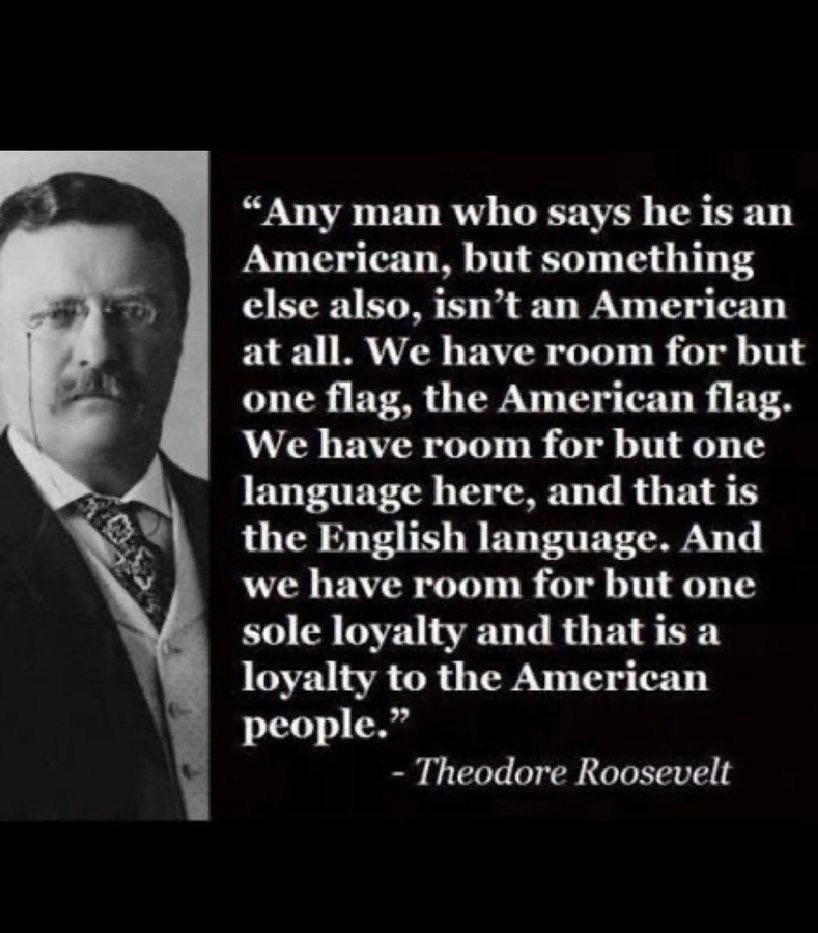
The insistence on “unhyphenated” Americanness has always been a linguistic trick, a way to disguise whiteness as neutrality. The “unhyphenated American” is not a person; it’s a cultural fiction — an Anglo-Protestant template pretending to be universal. Every immigrant, every Indigenous lineage, every forced diaspora tells us otherwise.
To call oneself American has never meant belonging to a single culture, language, or faith. It has meant joining a shared civic project: a plural experiment in self-government. That experiment began with contradiction and still depends on it.
When people speak of “American culture,” what they usually mean is a particular blend of English language, European ancestry, and Protestant moral codes — the same ingredients once promoted as the only acceptable face of the republic.
But culture implies continuity, and the United States has none that is singular. From the start it was a negotiation — Indigenous, African, European, Asian, and Latin American traditions colliding and re-forming under a civic flag.
The Constitution defined no culture. It built a political architecture that could contain many. To confuse that architecture for an ethnicity is to hollow out the entire experiment.
In 1916, while Theodore Roosevelt warned against “hyphenated Americans,” John Dewey was arguing the opposite. In Nationalizing Education, he wrote:
“The way to deal with hyphenism is to welcome it… to extract from each people its special good, so that it shall surrender into a common fund of wisdom and experience what it especially has to contribute.”
Dewey understood what Roosevelt feared: that a democracy defined by difference might outgrow the old European model of nationhood. Where Roosevelt demanded purity, Dewey demanded participation.
He saw that every hyphen was an artery — carrying fresh language, story, and meaning into the democratic body. Erase the hyphen, and you starve the system that keeps democracy alive.
The fantasy of an unhyphenated American inevitably reappears whenever the dominant group feels fragile. It is the myth that justifies exclusion — from 19th-century nativism to the English-only laws of the early 20th century to today’s culture-war nostalgia for a “real America.”
But that nostalgia is amnesia. It forgets that jazz came from the collision of Africa and America, that democracy itself was reshaped by waves of migration and dissent. It forgets that pluralism, not purity, has always been the nation’s creative engine.
As Dewey warned:
“The dangerous thing is for each factor to isolate itself, to try to live off its past.”
Isolation — whether racial or ideological — is how a republic becomes a tribe.
If we use the phrase American culture at all, it can only mean this:
A culture of encounter — a living, unfinalized negotiation among peoples, ideas, and hopes.
The only true “unhyphenated American” is a myth.
But the hyphen itself — that mark of relation and renewal — is the most American symbol of all.